


Compression Garments and Massage Therapy: A Complete Guide for Support, Recovery, and Comfort - Arlington, TX

Updated: Aug 17

Compression garments and massage therapy often work well together when used appropriately. While massage therapy may help support circulation, reduce muscular tension, encourage lymphatic movement, improve tissue mobility, and enhance overall comfort, compression garments may help maintain those benefits between sessions.
For many individuals, combining therapeutic bodywork with proper compression support can be an effective part of wellness, recovery, and swelling management.
This guide is designed to help you review whether compression garments may be right for your needs and to better understand the many options available.
Why Compression Matters After Massage

After massage therapy, tissues may feel lighter, less congested, and more mobile. Compression garments can help support those results by providing gentle structure and encouraging continued fluid movement throughout the day.
This may be especially beneficial for individuals with:
Lymphedema
Edema or fluid retention
Post operative swelling
Varicose veins
Heavy or tired legs
Neuropathy related discomfort
Circulation concerns
Compression may also help reduce the return of swelling between sessions for some individuals.

What Compression Garments Do
Compression garments apply steady, supportive pressure to specific areas of the body.
They may help:
Encourage lymphatic and venous flow
Reduce swelling and fluid buildup
Support healing tissues
Improve comfort during standing or travel
Decrease heaviness or fatigue
Provide stability and body awareness
Maintain progress after massage or lymphatic care
Helpful for Many Conditions

Lymphedema
Compression is often an important part of long term lymphedema management. It may help maintain progress after manual lymphatic drainage and support swelling control.
Edema
Helpful for swelling related to travel, prolonged sitting, standing, heat, or circulation concerns.
Post Operative Recovery
Often recommended after surgery to support tissues, reduce swelling, and assist healing comfort. Follow your surgeon’s recommendations.
Neuropathy
Some people report gentle compression creates warmth, support, and a more secure feeling in the limbs.
Varicose Veins and Leg Fatigue
May help reduce heaviness, aching, and tired legs.
Sensory Regulation
Some individuals with sensory processing concerns or nervous system dysregulation find gentle pressure calming and grounding.
Body Support and Compression Wear
Some individuals use binders, shaping garments, or compression tops for comfort, support, or body contouring preferences.
Athletic Recovery
Popular for workouts, long travel days, and recovery support.
Types of Compression Garments

Compression Socks
Used for feet, ankles, and calves. Popular for travel, standing jobs, and tired legs.
Knee High Compression
Helpful for lower leg swelling and circulation support.
Thigh High and Full Leg Compression
Used when support is needed above the knee or throughout the leg.
Compression Leggings
Often used for mild support, exercise recovery, and daily comfort.
Arm Sleeves and Gloves
Helpful for arm swelling, repetitive strain discomfort, or post procedure support.
Torso and Midsection Compression
Includes abdominal binders and post surgical garments.
Compression Tops and Binders
Used for posture support, chest compression, shaping, or comfort preferences.
Full Body Compression
Used in some post surgical, specialty medical, or athletic recovery settings.

Understanding Compression Levels
Compression strength is measured in mmHg (millimeters of mercury).
Light Compression (8–15 mmHg)
Good for travel, mild fatigue, and everyday comfort.
Moderate Compression (15–20 mmHg)
Helpful for mild edema, standing jobs, pregnancy support, and circulation needs.
Firm Compression (20–30 mmHg)
Often used for swelling, varicose veins, post operative care, and mild lymphedema.
Extra Firm Compression (30–40 mmHg)
Used for more significant swelling or chronic venous concerns with guidance.
Higher Medical Compression (40+ mmHg)
Reserved for advanced needs under professional supervision.
How to Choose the Right Garment
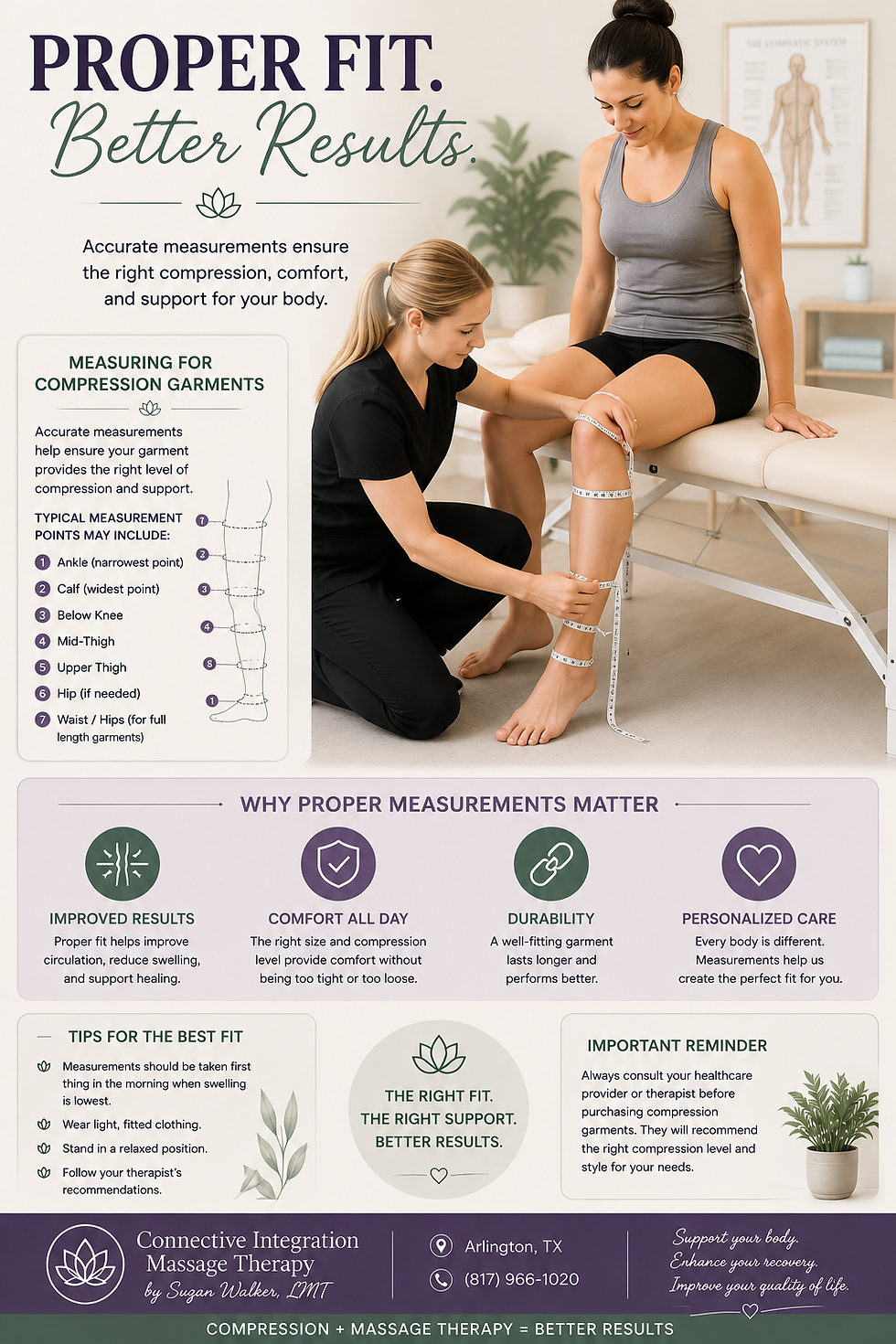
Choose based on:
Body area needing support
Severity of swelling or symptoms
Comfort level
Ease of putting on and removing
Daily activity needs
Medical recommendations
Specific condition involved
A garment should feel supportive, not painful, restrictive, or numb.
Where to Find Compression Garments

Compression garments are available through:
Medical supply stores
Pharmacies
Custom fitting compression clinics
Local compression garment shops in the Dallas Fort Worth area
Online retailers such as Amazon
Specialty brands like Tommy Copper
Activewear retailers such as Old Navy for light compression leggings
Educational resources such as Norton School of Lymphatic Therapy
Your insurance provider for approved vendors or medically necessary garments
Consistency Matters

If you live with swelling, lymphedema, edema, post operative concerns, or circulation issues, regular care is often more beneficial than only occasional treatment. Consistent massage therapy, lymphatic support sessions, and proper compression use may help maintain comfort and improve long term results.
Important Reminder
Compression garments are supportive tools, but they are not a cure. Proper fit, correct pressure, and consistency matter. If you have diabetes, severe neuropathy, arterial disease, wounds, sudden swelling, or unexplained pain, seek medical guidance before use.

I hope this guide helped you better understand the role of compression garments and how they work alongside massage therapy to support your body.
Both can play an important role in improving comfort, managing swelling, and supporting overall quality of life when used appropriately and consistently.
If you’d like support, guidance, or hands-on care feel free to contact me at 817-966-1020.
With care and support,
Suzan Walker LMT
Compression Garments and Massage Therapy Q&A

Do I need a prescription for compression garments?
Some higher compression levels (20–30 mmHg and above) may require a prescription depending on where you purchase them. Always check with your provider or insurance.
Can I wear compression garments all day?
Yes, many people wear compression garments throughout the day. However, they should feel supportive not painful or restrictive.
Can I sleep in compression garments?
This depends on the type and compression level. Some garments are designed for nighttime use, but not all. Follow professional guidance.
How tight should compression garments feel?
They should feel snug and supportive, but not cause numbness, pain, or discoloration.
Do compression garments replace massage therapy?
No. Compression helps maintain results, while massage helps move fluid and improve tissue mobility. They work best together.
How often should I replace compression garments?
Most garments should be replaced every 3–6 months depending on wear and elasticity.
Massage Therapy Disclaimer
Massage therapy is a professional healthcare service but is not a substitute for medical treatment. A massage therapist cannot diagnose, treat, or prevent medical conditions. Recommendations may include products, services, or referrals to a licensed physician or mental health professional.
*Clients interested in therapeutic bodywork & massage, wellness education, or upcoming classes are encouraged to explore the services offered at Connective Integration Massage Therapy in Arlington, Texas.
Copyright © 2007-2026. Connective Integration Massage Therapy by Suzan Walker, LMT. All rights reserved. DMCA Protected. (Licensed in Texas as Susan D. Walker, LMT #104431) Official website: www.massageandhealingdfw.com | 817-966-1020 | Third-party listings may contain inaccurate information.


Comments